Hack Spirit Editorial Team
Some things about growing up in a slower time weren’t better or worse. They were just slower, and that slowness had a texture to it that’s hard to describe to anyone who didn’t live it.
The days had more empty space in them. Whole afternoons with nothing scheduled. The small joys came from that emptiness, from boredom and waiting and the absence of a screen to fill every gap. Looking back, the gaps were where most of the good stuff actually happened.
Here are a few of those small joys.
1. The whole day with nothing planned
Summer mornings stretched out with no schedule, no activities booked, nothing you had to be at.
You woke up and the day was just a blank space waiting to be filled however you wanted. No camps, no lessons stacked back to back, no parent ferrying you between commitments. The boredom that came with it was uncomfortable for about an hour, and then it turned into the best part.
You’d invent a game, build something, wander off down the street to see who was around. That open, unstructured time was where imagination actually lived. Kids today are scheduled so tightly that the blank day has nearly vanished.
2. Riding bikes until the streetlights came on
The one rule was simple: be home when the lights come on. Until then, you were free.
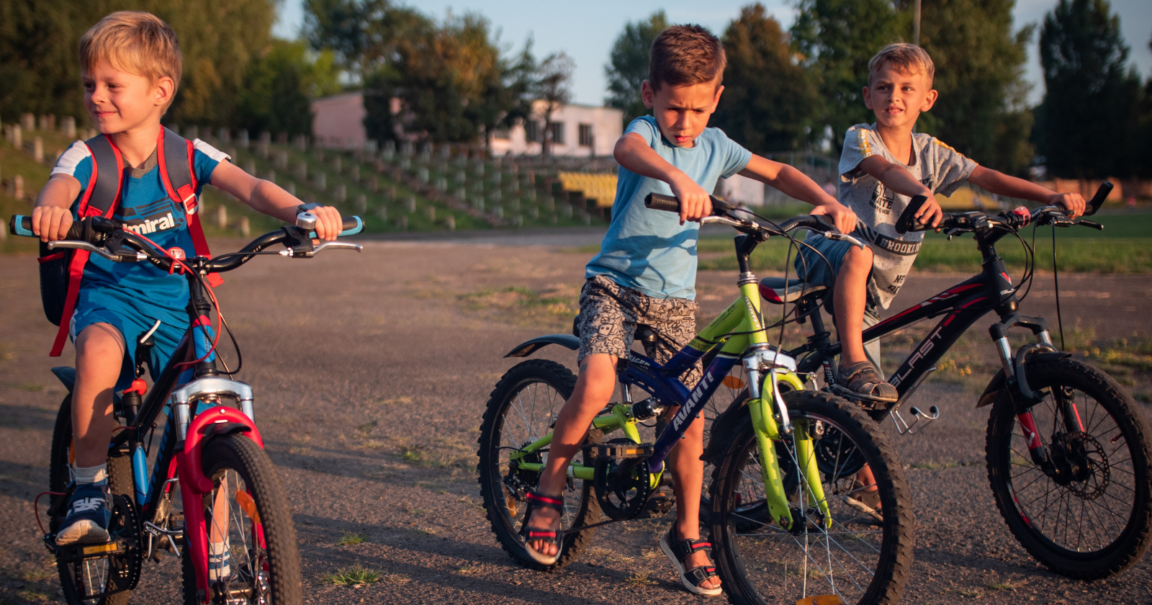
You’d disappear on your bike for hours, ranging across a chunk of the neighborhood no adult was tracking. Nobody had a phone. Nobody knew exactly where you were, and somehow that was fine. The streetlights flickering on at dusk was the signal, the closest thing to a clock anyone used. That kind of freedom has become harder to come by. You belonged to the afternoon and to your friends, and the world trusted you to find your way back before dark.
3. The mixtape made just for you
Someone sat by the radio or the record player for hours, recording song after song onto a single cassette. Making a tape took real time and care. You had to catch the song at the right moment, get the order right, sometimes write the track list out by hand on the little paper insert. When someone handed you one, you knew they’d spent an afternoon thinking about you. It meant something a playlist clicked together in thirty seconds can’t quite match.
The effort was the message. You’d play it until the tape wore thin, and you remembered exactly who gave it to you.
4. Waiting all week for one show
Your favorite program came on once a week, at a set time, and you organized your whole week around it.
You couldn’t binge it. You couldn’t watch it whenever the mood struck. So the anticipation built for seven days, and when the night finally came, you were planted in front of the set early so you wouldn’t miss the opening. Missing it meant missing it, full stop, until who knew when. That waiting made the thing itself feel like an event. The next day everyone had seen the same episode at the same time, and you could talk about it with anyone.
5. Reading the cereal box at breakfast
With nothing else to look at over breakfast, the cereal box became fascinating. You read the back of it a hundred times. The puzzles, the cartoon mascot, the nutritional panel you didn’t understand and didn’t care about. There was no phone propped against the milk jug, no screen competing for your eyes.
So your attention landed on whatever was in front of you, and somehow the most ordinary object in the kitchen held you. It sounds like nothing. But that calm, undistracted breakfast, just you and your thoughts and a box of cereal, is the kind of morning a lot of days have lost.
6. Hearing the ice cream truck two streets away
The chimes came faintly at first, and you had about ninety seconds to find money and get to the curb. That sound could empty a backyard faster than anything. You’d scramble through the house looking for coins, sprint out the front, and hope it hadn’t already turned the corner. If you made it, the choosing took forever, the same options you’d picked from a hundred times before, somehow still requiring full deliberation. The whole ritual lasted five minutes.
But the combination of the chase, the heat, and the cold thing finally in your hand gave a small summer afternoon more shape than most planned events manage. It was a joy that arrived on a schedule nobody controlled.
7. The long, boring car ride
A road trip meant hours in the back seat with no screen, just the window and your own imagination. You watched the landscape roll past. You played the games you could play with whatever was out there, counting things, making up stories about the houses you passed, squabbling with a sibling over the invisible line down the middle of the seat. The boredom forced you inward and outward at once.
Those long drives, with nothing to do but look and think and talk, were strangely some of the richest hours of a childhood. The dead time turned out not to be dead at all.
8. Knowing everyone on the street
The neighborhood was a web of familiar faces, and you knew which door to knock on for almost anything.
You knew whose mom kept the good snacks, which yard you could cut through, which neighbor would wave you over to help with something and slip you a few dollars.
Kids moved freely between houses, and the adults all sort of kept a loose eye on the whole pack. There was a safety in being known by a dozen grown-ups within a short walk. The street was a shared place, not a row of strangers, and a kid grew up feeling held by more than just their own four walls.
The slower time wasn’t better in every way. Plenty about it was harder, and most of us wouldn’t give up what we have now to go back.
It’s more that some of those small pleasures got crowded out without anyone deciding to let them go. If a couple of these stirred something, the unplanned afternoon still exists. It’s just waiting to be left alone.