Hack Spirit Editorial Team
Turn the television off on an ordinary evening and the room gets strange for about ten minutes.
Nobody knows what to do with themselves. Someone reaches for a phone. The silence feels like something has gone wrong rather than something has been removed.
Then it settles, and other things start showing up in the space where the noise was. Small things, mostly forgotten. Here are eight of them.
1. You hear the house
Pipes ticking as they cool. The fridge cycling on. Someone upstairs shifting their weight on a floorboard you’d forgotten made that noise.
None of it is interesting. That’s rather the point.
A house has a low background hum of its own, and a television covers it completely, which is partly why the television gets switched on in the first place. The stillness can feel like absence.
But after a while the sounds stop registering as emptiness and start registering as the building being alive. People who live alone often notice this one first.
2. The conversation that starts from nothing
With the screen off, someone eventually says something. Not to open a discussion. Just because the silence had room in it.
These conversations tend to be worse than the ones you plan and better than the ones you have over a programme. They wander. They fall silent in the middle and pick up again.
Ask a couple who’ve been together thirty years where the good talks happened, and it’s rarely anywhere impressive.
Kitchen table. Car. The half hour before bed with nothing else on.
3. Reading in the same room as someone else
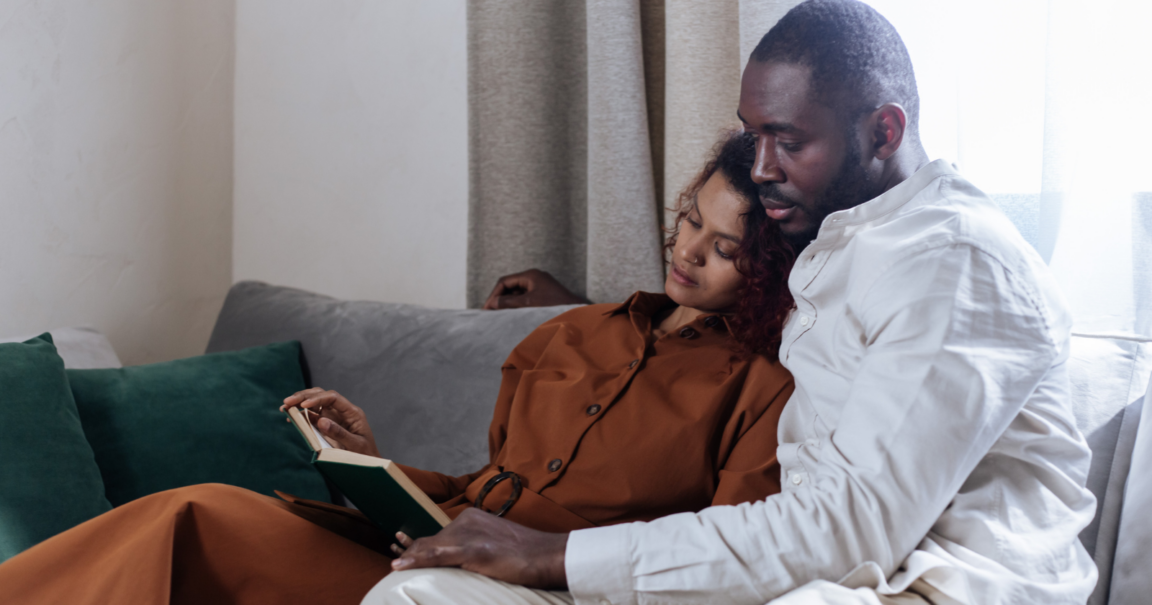
Two people, two books, one lamp between them. Nobody speaking for forty minutes.
This is a specific pleasure and it’s almost impossible with a screen going, because a television insists on being shared. You’re both watching the same thing at the same speed whether you like it or not.
Reading side by side is the opposite. Separate worlds, same sofa.
You’ll notice people occasionally read a line out loud to each other, and then go straight back to their own book without waiting for a response. That’s the whole shape of it.
4. Evenings get longer
An hour of television passes without leaving much behind. An hour of not much at all somehow takes longer and feels more like time you had.
Part of this is that you’re making small decisions again. What to do next, whether to go outside, whether the kitchen needs doing now or later.
Screens remove those decisions, which is the appeal after a long day.
But an evening with no decisions in it compresses into almost nothing by the time you go up to bed. People describe the alternative as the night feeling stretched. It’s the same length. It just has more in it.
5. When someone starts fiddling with something
The mending gets done. The guitar comes out of the corner. Someone starts sorting the drawer of chargers and old keys that everyone has agreed to ignore for two years.
Idle hands find work when there’s nothing to look at.
Most of these tasks are too small to schedule and too boring to prioritise. They only ever get done in the gaps. A house with the television on has fewer gaps.
There’s a satisfaction in this that’s hard to sell to anybody. Sewing a button on at nine in the evening is not a thrilling proposition. It’s just good afterwards — the kind of good that doesn’t announce itself.
6. Music you actually listen to
Not music as background, which is what most music has become. Music where somebody chose the record, put it on, and then sat down.
The difference is enormous and almost nobody does it anymore.
You get the whole thing in order. The weaker tracks in the middle. The one you’d normally skip that turns out to make sense in position four.
And there’s the odd social fact of people sitting in a room listening to the same sound while facing different directions, which used to be an entirely normal evening and now sounds faintly eccentric.
7. Children get bored in a useful way
The complaining is real and it lasts about twenty minutes. Then something happens.
They build something ridiculous out of cushions. They start a game with rules only they understand. They come and stand next to you and talk about nothing for a while, which is often when the important information arrives.
Boredom has a bad reputation it doesn’t entirely deserve.
Parents who’ve sat through the difficult first stretch tend to say the same thing: the second half is worth it, but you have to not rescue them from it. Hand them something to look at and the whole process resets.
8. Going to bed when you’re tired
This is the practical one and possibly the biggest.
Television has no natural stopping point. One thing ends and another begins, and the decision to stop has to be actively made against a machine designed to prevent it. Most people lose that argument several nights a week.
Without it, tiredness just arrives and gets acted on. You notice you’ve read the same paragraph twice, and you go up.
The evening ends when your body says so rather than when the episode does. It’s a small return of authority over something you were supposedly always in charge of.
This isn’t an argument against television, which is often exactly the right thing after a hard day and doesn’t need defending.
It’s just that switching it off is reversible and free, and one evening a week is enough to find out what’s underneath it in your particular house. Some people try it and go straight back. Others are surprised by how quickly it stops feeling like a sacrifice.