Lachlan Brown
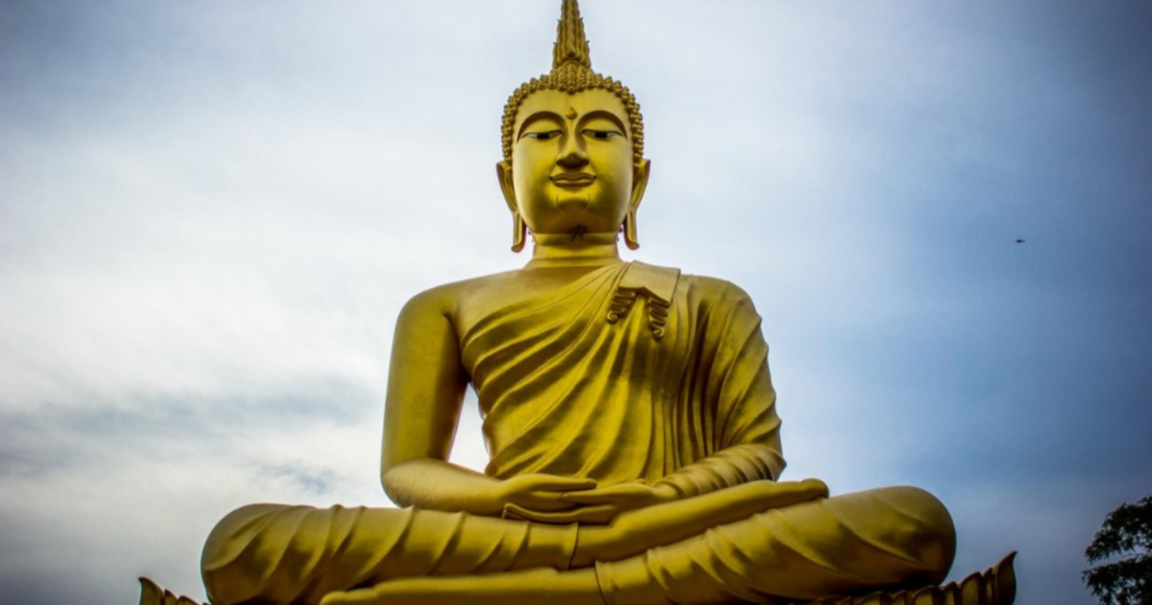
We live in a time when Buddha quotes float through social media feeds like feathers—light, graceful, and strangely disconnected from the weight of what they were meant to hold.
They appear on minimalist backgrounds, often stripped of nuance, reduced to soft encouragements: Let that sht go*, or Peace comes from within.
And while I understand the impulse—sometimes a gentle phrase is what we need to keep going—I’ve also found myself wondering what happens when we stop at the surface.
Because real Buddhist wisdom doesn’t just soothe. It challenges. It doesn’t flatter the ego. It dissolves it.
When I wrote Hidden Secrets of Buddhism, it wasn’t to decode ancient scriptures or deliver a spiritual roadmap. It was to sit with the discomfort, the paradoxes, the quiet truths that live behind the quotes. And to ask: What happens when we let them actually work on us?
Here are a few that have worked on me—gently, persistently, and sometimes painfully.
“Searching in every direction
with your awareness,
you will find no one dearer than yourself.
In the same way, others are each
dear to themselves.
Therefore, one who loves oneself
should not harm another.” – Buddha
I remember reading this in my early twenties and feeling both comforted and exposed. On the surface, it reads like a self-help mantra. But when you sit with it longer, something deeper stirs.
Because the truth is: many of us don’t believe it.
We give our kindness to others effortlessly. We show patience to people we barely know. But when it comes to ourselves, we’re ruthless.
This quote doesn’t just ask you to love yourself—it confronts the belief that you’re the exception. The one who must earn care. The one who’s not quite worthy yet.
I’ve learned that self-love, in Buddhist terms, isn’t about indulgence. It’s about non-exclusion. It’s the radical recognition that you too are part of the whole. That your suffering, your confusion, your desire for peace is not separate from anyone else’s.
In Hidden Secrets of Buddhism, I talk about how compassion begins when you stop treating yourself as a project and start treating yourself as a person. That’s what this quote calls us toward. Not perfection. Presence.
“All that we are is the result of what we have thought. The mind is everything. What you think, you become.” – Buddha
There’s something empowering—and terrifying—about this one.
When I first read it, I felt a burst of motivation. As if I could reshape my entire life with enough positive thinking. But with time, I came to see it less as a call to control the mind and more as an invitation to watch it.
Because the mind doesn’t just shape who we become—it shapes what we think we are.
The stories we rehearse. The labels we attach. The fears we feed. They don’t stay thoughts. They become filters. They tint our experience, color our reactions, define our limits.
In mindfulness practice, this quote becomes startlingly real. You begin to see how quickly a thought can spiral into an identity: I made a mistake becomes I’m a failure. A fleeting feeling of loneliness becomes a story of abandonment.
But the Buddha wasn’t shaming the mind. He was revealing its power—and reminding us that, through awareness, we can begin again.
We can choose to notice the thought and not follow it. To feel the fear and not obey it.
And in doing so, we become something new. Not because we forced it. But because we remembered we could.
“Hatred is never appeased by hatred; hatred is appeased by non‑hatred.” – Buddha
Letting go of anger isn’t an intellectual task. It’s a cellular one.
For me, this quote has never felt like a commandment. It’s more like a mirror. It doesn’t judge you for being angry — it shows you what it costs.
Years ago, I carried resentment toward someone who betrayed me. I told myself I had let it go. But every time their name came up, something clenched. Not because I hadn’t “forgiven,” but because I hadn’t really felt what the anger was protecting.
It wasn’t hatred. It was hurt. Powerlessness. Shame.
And until I was willing to sit with those feelings—not analyze them, but feel them—I couldn’t release the poison.
That’s what this quote reminds me. Anger isn’t bad. It’s just heavy. And sometimes, the bravest thing you can do is put it down.
“Make haste and strive! The wise delight in the journey of the Dhamma.” – Buddha
On first glance, it sounds like a spiritual platitude. But the more I let this one echo through my life, the more radical it feels.
In a culture obsessed with goals, this quote says: Forget the finish line.
It doesn’t mean don’t dream. It doesn’t mean don’t work hard. It means the process is the destination.
And that’s where it gets uncomfortable. Because most of us don’t actually enjoy the process. We tolerate it in hopes of reward. We grind through the present to get to the future.
But Buddhist practice is brutally honest about the impermanence of arrival. Even when you get what you want, it won’t last. The body changes. The mind shifts. The people we love leave.
So what’s left?
How you moved. How you listened. How you treated yourself and others along the way.
In Hidden Secrets of Buddhism, I wrote about how this quote helped me slow down—not just in daily life, but in my inner life. I stopped trying to “fix” myself so I could become worthy. I started asking: Can I be kind to myself even here, even now, even before I’ve healed?
That’s what it means to travel well.
“You yourselves must strive; the Buddhas only point the way.
Those who meditate and follow the path are freed from Māra’s bonds.” – Buddha
This one used to scare me. I wanted guidance. A mentor. A sign. Something external to point the way.
But this quote doesn’t abandon you. It empowers you.
There is wisdom in teachers, in tradition, in sacred texts—but no one else can live your insight. No one else can choose your truth for you.
I’ve found, again and again, that the turning point in anyone’s growth doesn’t come from advice. It comes from the moment they stop waiting and start walking.
The Buddhist path isn’t passive. It’s deeply personal. It’s not a system you download. It’s a journey you inhabit. And yes—it’s lonelier than people admit. But it’s also where freedom lives.
Because once you realize no one’s coming to rescue you, something shifts. You stop waiting. You begin.
Quotes are strange little things. Sometimes they feel trite. Other times, they land like a bell that won’t stop ringing.
Buddha didn’t offer quotes. He offered teachings—meant to be lived, not printed on mugs. But if we slow down, if we let the words enter rather than decorate, something begins to unfold.
Not answers. Not certainty. But presence.
And that is enough.
Because in the end, the most powerful quotes don’t teach you something new.
They remind you of what, deep down, you’ve always known.
Did you like my article? Like me on Facebook to see more articles like this in your feed.