Hack Spirit Editorial Team
Ask someone what their childhood home was like and they’ll describe the layout for about four seconds. Then they’ll start talking about the sound the front door made.
Memory of a house is almost never architectural. It’s stored in odd places. Textures, noises, the exact temperature of one room in February.
Most of it is stuff nobody chose or noticed at the time, which is probably why it lasted. Here are nine of the things people find they’ve kept.
1. The sound of the front door
Every house has one and no two are alike. The stick before it gave. The particular rattle of the letterbox. The way you could tell which parent had come in by the rhythm of the handle.
Kids learn that sound before they learn much else, because it’s the signal that determines the next hour of the evening.
Adults report hearing it in other houses and having a full-body reaction to a door that isn’t theirs.
Nobody ever mentions the door while they still live there. It only becomes a thing after you’ve stopped hearing it every day.
2. Where the light fell in the afternoon
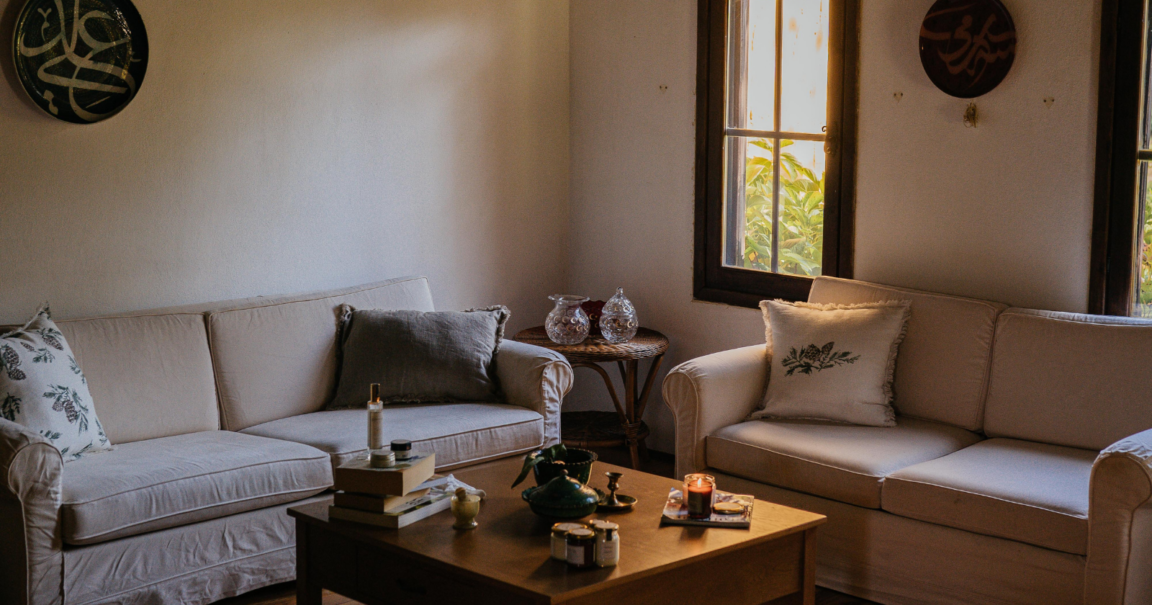
Houses have one good hour and children know exactly when it is. The stripe across the carpet at four o’clock. The kitchen going gold in September.
You never think about it as light. You think about it as a place, a specific patch of floor that was warm and worth lying on.
Later you’ll walk into a rented flat somewhere and stop, because the sun is hitting the wall at the same angle.
It’s one of the strongest triggers there is, and one of the least expected, since almost nobody grows up thinking they’re paying attention to windows.
3. The chair nobody else sat in
Most homes had one. A specific seat that belonged to a specific person and stayed empty when they weren’t in it.
The rule was never stated. There was no punishment. It just wasn’t done, and every visiting friend needed steering away from it at least once.
Adult children remember the exact wear pattern on the arm. The book left on it. The angle it faced.
It’s one of the first things people notice missing when a parent dies or the house gets sold. The chair goes and the room stops making sense.
4. The junk drawer
Batteries of unknown charge. Three keys nobody could identify. A takeaway menu from a place that closed in 2004. Tape, string, a single glove.
Every family has one and every family’s is different, but they share a quality of being outside time. The contents accumulate and are never audited.
Grown adults will list the contents of their parents’ junk drawer with startling accuracy, decades on.
Part of it is that a kid with nothing to do goes through that drawer maybe two hundred times. It’s the closest thing a household has to an archive.
5. When the phone rang after nine
A late call meant something and everyone in the house understood the grammar of it. Conversation stopped. Somebody went to answer it.
What kids remember is not the news but the sequence. Their mother’s voice dropping half an octave. The way the room reorganized itself.
Most late calls turned out to be nothing. A wrong number, a friend who forgot the time.
The memory sticks anyway, because that ten-second gap between the ring and the reassurance was the loudest silence in the house, and it happened a handful of times a year for eighteen years.
6. The smell they can’t describe
Everyone’s house had one. Nobody who lived there could smell it. Visiting friends could, immediately, and generally had no words for it either.
It’s a compound of things. The washing powder. Whatever was cooked most often. The carpets, the damp corner, the specific brand of soap in the bathroom for twenty years.
You only encounter it once you’ve left. A cupboard opened on a visit home, or a stranger walking past who happens to use the same detergent.
It goes straight past thought and lands somewhere older. There’s a reason people talk about this one more than any other.
7. The stuff on the fridge
A geological record, layered by year. The magnet from a holiday. The school photo somebody was embarrassed by. The dentist card three years out of date.
Nothing on there was curated. It went up and stayed up, and things only came down when they fell.
What people remember is often the thing that stayed longest past its relevance. A drawing done at six, still there at twenty-two, proof that somebody in the house had decided it mattered.
Kids clock that. They never say anything about it.
8. The room you weren’t supposed to be in
Some houses had a good room. The front room, the parlour, whatever it was called locally.
Kept for guests who came twice a year. Slightly cold. Furniture nobody sat on. Ornaments from a wedding.
The strange thing is how well people remember a room they were barely allowed into. Every detail of the mantelpiece, catalogued by a child who got thirty seconds in there at a time.
Plenty of adults now think the whole idea was faintly ridiculous, keeping a room in reserve. They can still describe the wallpaper from memory.
9. Where everyone actually sat
Houses have an official layout and a real one, and the real one is decided by where people end up.
Usually it’s the kitchen. The dining table covered in paperwork rather than dinner. One end of a counter, two stools, and everybody in the family gravitating there regardless of what other seating exists.
Big living rooms often went unused for months at a stretch.
The memory that survives is of that unglamorous corner. Somebody standing at the sink with their back to you while you talked, which turns out to be the setting for a surprising number of important conversations.
Most of this was never designed. It just accumulated, and the parts that stayed with people are almost always the parts nobody was trying to make memorable.
Mention some of it out loud next time you’re back. Parents are often startled to hear which details a child kept, and they usually have three or four of their own about the same rooms that nobody has ever asked them for.