Lachlan Brown
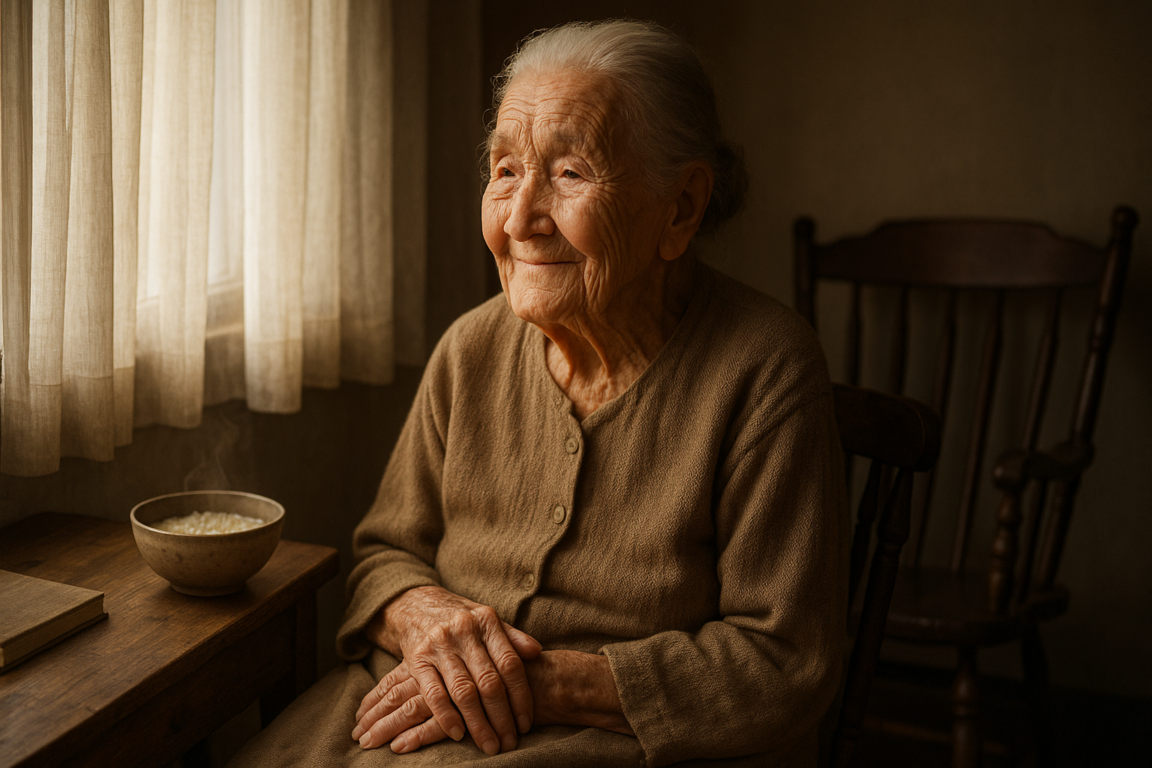
When Jessie Gallan turned 109, she was asked the question we’ve all quietly wondered about: What’s your secret to living a long life?
Her answer?
“My secret to a long life has been staying away from men. They’re just more trouble than they’re worth.”
Now, depending on your own experience with love, that might make you laugh—or nod in total agreement.
But underneath the humor is something worth pausing for. Because Jessie’s life was far from ordinary. She was born in 1906, grew up in a two-room farmhouse with six siblings, left school at 13, and worked most of her life as a milkmaid and housekeeper. She never married. She lived simply. And yet, she outlived almost everyone she knew.
You can read about her story in this Business Insider article, but I want to talk about what it really means. Because Jessie’s “stay away from men” comment might sound like a punchline — but it also points to something deeper.
Her life wasn’t defined by chasing approval, following a conventional path, or living according to other people’s timelines. It was defined by clarity, consistency, independence, and a kind of grounded joy we don’t talk about enough.
And I think we can learn a lot from that.
Why simplicity often beats strategy
We love complexity. Just look at the wellness industry. Biohacking. Nootropics. Cold plunges. Red light therapy. And sure, some of that stuff has merit. But the problem is when we think longevity requires some elite combination of hacks and habits we don’t have time or money for.
Jessie? She kept it simple. By her own account, her routine was porridge and hard physical work, and not much else. She kept romance out of it too.
I’m not saying we should all swear off relationships. But I do think there’s something powerful about creating a life that doesn’t depend on chaos to feel meaningful.
What staying true to yourself actually looks like
Jessie never married, and she didn’t apologize for it.
Now, I’m not interested in turning this into a battle of the sexes. But her words stuck with me. Not because she was anti-connection — but because she was pro-boundaries. She knew what brought her peace. And she protected it.
So many people live their lives based on what’s expected of them. Get married by 30. Have kids. Chase stability. Buy the house. Retire at 65. But Jessie reminds us that you don’t owe anyone your life story.
I read her story less as a longevity formula and more as an invitation to question expectations.
The underestimated power of movement and natural rhythms
Jessie worked as a milkmaid. That job doesn’t come with a gym membership—but it does involve early mornings, fresh air, physical effort, and structure.
And that matters. A lot.
Numerous studies back this up. Daily movement, even if it’s just walking or gardening, can significantly increase your life expectancy.
According to Blue Zones research, communities with the highest concentrations of centenarians all have one thing in common: natural movement woven into their day.
They’re not doing deadlifts and protein smoothies. They’re walking up hills, tending to gardens, cleaning, carrying things, cooking from scratch.
And if you think about it, this is what many ancient philosophies—including Buddhism—have always taught: keep the body engaged, keep the mind humble, keep your days rhythmic.
Nature is the original healer
Jessie grew up in the Scottish countryside. Her early life was likely spent surrounded by trees, fields, wind, and weather. She didn’t “forest bathe” or do mindfulness retreats—because she was living it.
A 2019 paper in Science Advances reviewed the evidence linking time in nature with mental health benefits, and the life it describes as protective looks a lot like the one Jessie had by default. We can’t say it’s why she lived so long, but fresh air and open country were part of the simple life she knew.
Porridge, every morning
Jessie ate porridge every morning.
No keto. No intermittent fasting windows. Just oats, hot water or milk, maybe a little salt.
I’m not going to pretend a bowl of oats explains 109 years. But there’s something in the fact that she never needed a plan, a label, or an eating window. She ate what was in front of her and got on with the day.
The hidden cost of emotional drama
Jessie’s tongue-in-cheek advice about men actually hides a goldmine of insight.
Most of us underestimate the toll emotional stress takes on the body. Constant conflict. High-stakes relationships. Insecure attachments. The feeling of never quite being enough for someone.
Now, this isn’t a warning against intimacy. Relationships are one of the greatest sources of joy. But not all of them. And not when they come at the cost of your peace.
If a relationship is costing you your peace, that deserves an honest look. Only you can make that call, and a centenarian’s one-liner won’t make it for you.
The spiritual takeaway
Jessie didn’t use spiritual language. But her life was, in many ways, a meditation.
She chose simplicity over chaos. Presence over performance. Ritual over noise.
This aligns with so many Buddhist principles I talk about in my book Hidden Secrets of Buddhism: that suffering often comes from wanting too much. That wisdom comes from presence. That a life lived with intention—however simple—can be a life well-lived.
To finish
Jessie Gallan lived to 109. Nobody can say exactly why, but the way she lived is worth thinking about.
She ate whole food. She moved her body. She stayed connected to the earth. She avoided unnecessary drama. She laughed at expectations. She stayed independent.
And maybe most importantly—she didn’t wait for life to give her permission.
Longevity is about more than extra years. It’s about living well, and living well often looks like this:
Doing less. Wanting less. Needing less drama.
And trusting that joy doesn’t always come from more—but from enough.
So maybe the secret isn’t in the supplements or the tech or the hustle.
Maybe it’s closer to home: in your own routines, your own boundaries, and knowing what feels like enough.
Did you like my article? Like me on Facebook to see more articles like this in your feed.