Hack Spirit Editorial Team
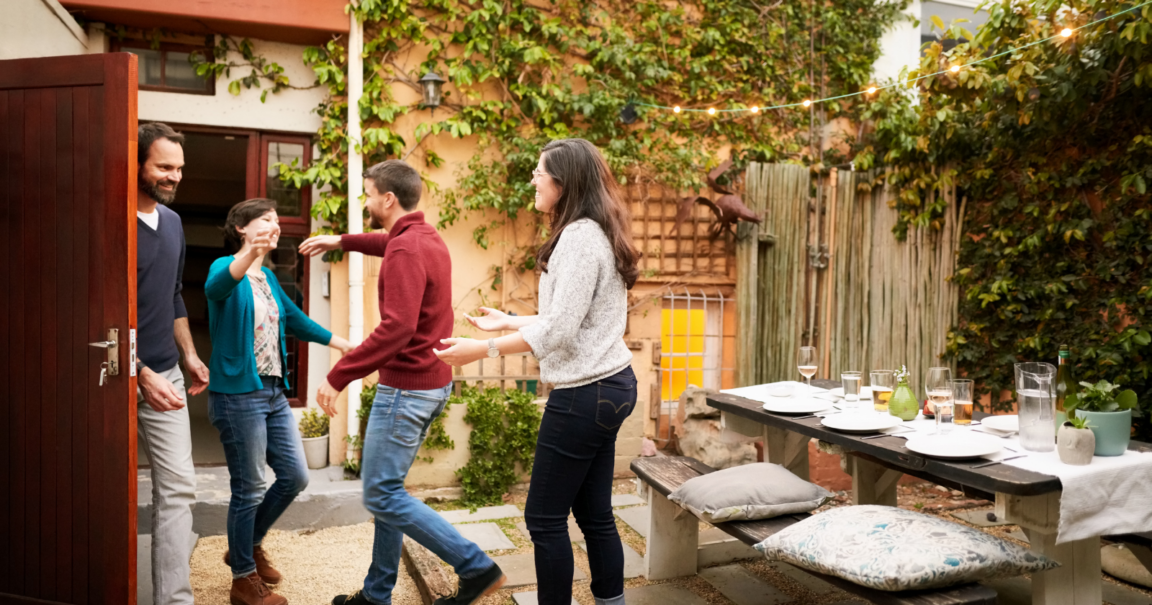
There’s a surprising amount of information in a house, and most of it gets taken in before anybody has sat down.
None of it gets said out loud. What gets said is that the place is lovely, or that the drive was fine, or that yes, tea would be great. The noticing happens underneath all that, usually without the person doing it realising they’re doing it at all.
Seven things that register in the first five minutes and then never come up.
1. The smell in the first three seconds
It’s the first thing, before the hallway, before the shoes come off.
Every house has one and nobody can smell their own. Coffee, washing powder, dog, old radiator dust, whatever was cooked the night before. It’s the most immediate impression a home makes, and it’s the one detail a guest will never raise unless something has genuinely gone wrong.
The odd part is how long it lasts. People can bring back the smell of a grandparent’s house forty years later, long after they’ve lost the layout of the rooms and the colour of the carpet.
Nobody says a word about it. Everybody files it, and it becomes the version of the house they carry around.
2. Where you’re meant to sit
There’s a small pause in every living room while the visitor works out the seating.
Most homes answer it straight away. One chair has a side table beside it with a mug ring, a charger, a book left face down. That chair is spoken for. The sofa has one end that’s clearly in daily use and another that’s clearly going spare.
Guests read all of this inside two seconds and sit in the right place without being told, which is exactly why the host never notices it happening.
The rooms that feel awkward are usually the ones with no answer in them. Everything matching, nothing claimed, and the visitor left hovering by the door waiting to be placed.
3. When they apologise for the mess
Delivered at the front door, before the guest has looked at anything.
Here’s what actually happens. The visitor comes in with no baseline and no opinion, sees a perfectly normal house, and thinks nothing whatsoever about the pile of post on the table. Then it gets pointed out. Now they’re looking at it.
The apology is nearly always the first time the mess enters the room, and usually the only time it does.
Almost everybody does this, and it comes from a decent instinct, a wish for the guest to feel comfortable rather than judged. It just hands them a job they didn’t have thirty seconds earlier.
4. The chair with the dent in it
Every house has one seat that’s had more use than the rest, and it always shows.
The cushion has given way in one particular spot. The arm is worn on the side nearest the door. Quite often there’s a blanket that lives there permanently, folded in a way that suggests it’s never been put away properly.
That chair says more about the daily rhythm of a home than any amount of decorating. It’s where somebody spends their evenings, facing whatever they face, alone for a good stretch of them.
Visitors clock it immediately and step around it without discussion, the way you’d walk around a wet floor. It’s the one piece of furniture in the room that already belongs to a specific person.
5. What’s stuck to the fridge door
The only surface in most homes that nobody has curated.
A wedding invitation from last spring. A child’s drawing that’s been up long enough to curl at the corners. A takeaway menu, a dentist’s card, a photo strip from a booth, a magnet from a town nobody quite remembers visiting.
Living rooms get arranged with other people in mind. The fridge door just accumulates. What ends up on it is a fairly honest picture of who the household actually thinks about week to week.
Guests read the entire thing while waiting for the kettle, top to bottom, including the school newsletter from March. Nobody has ever admitted to finding it interesting.
6. They keep one room for best
Some houses have a room that’s noticeably unlived in, and you can tell inside a minute.
The cushions sit at angles nobody could sit at. No clutter, no charger, no glass left on a coaster, no sign of an ordinary Tuesday having happened in there. The door is usually closed the rest of the time.
It tends to come from an older idea about houses, handed down through a family, where a space was kept ready for visitors who mostly never turned up.
Guests notice it and often feel the weight of it. Being shown into the good room is a real kindness, and it also means everyone in it is now performing a little.
7. The half-finished thing in the corner
The patch of wall in a slightly different colour. The skirting board that stops. The box from the move that never got opened.
Every home has something that stalled, and the household has long since stopped seeing it. It becomes part of the wall. A visitor spots it straight away, having missed the four years of walking past it that made it invisible to everyone else.
Nobody mentions this one. It sits too close to being a comment about the person’s life, and it isn’t one. Things stall for ordinary reasons.
The generous reading is usually the accurate one. Money, or time, or a bad year. Something got in the way and then it stayed in the way, and eventually the corner stopped being a project and turned into part of the room.
This isn’t really about houses. It’s about how much people take in without ever deciding to, and how little of it ever reaches an actual conversation.
Which is probably how it should be. The unspoken part is what lets anybody relax in someone else’s home in the first place.
If somebody apologises for their kitchen this week, the useful thing is just not agreeing with them.