Hack Spirit Editorial Team
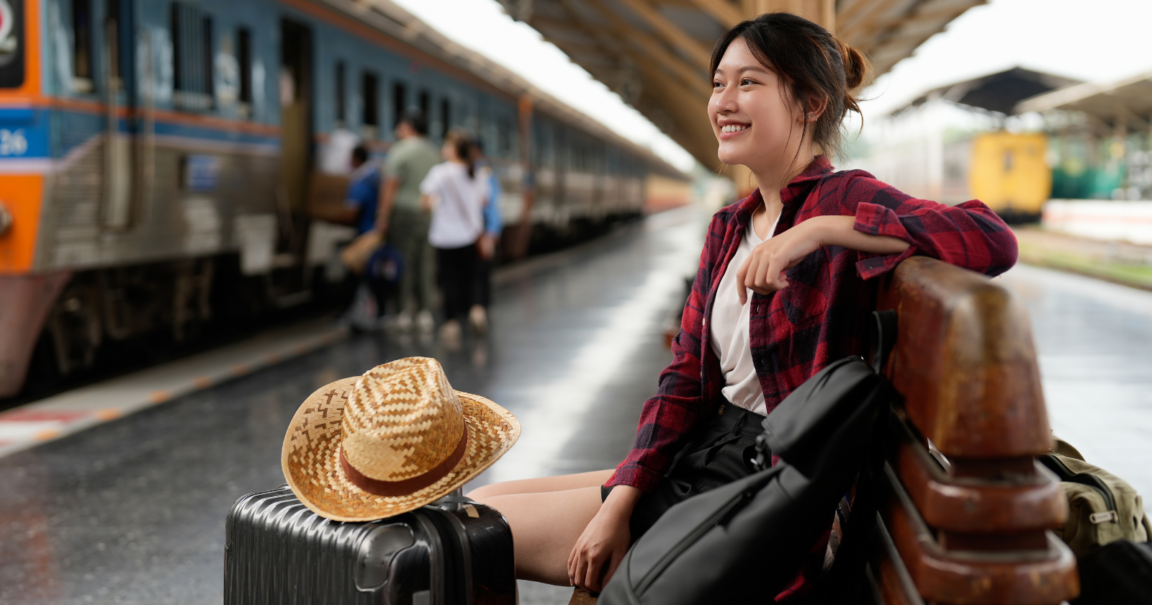
People come back from a trip with friends full of stories about the friends. People come back from a trip alone slightly changed, and usually a bit vague about why.
It’s not the destination doing it. Two people can walk the same three streets in the same city and only one of them ends up learning anything, and the difference is whether there was somebody else there to talk to.
Here’s what tends to show up when there isn’t.
1. Nobody is coming to make the decision
You’re standing at a junction at four in the afternoon with no plan and no one to defer to.
In a group this never happens. Somebody has a view, or everyone’s tired, or there’s a compromise that satisfies nobody and gets chosen anyway. The decision arrives from the middle of the group and no single person owns it.
Alone, it’s all yours, including the bad ones.
What people notice after a week of this is how rusty they’d become. Preferences you haven’t consulted in years start turning up again, and some of them surprise you.
2. The five o’clock dip
Solo travellers all know this one and rarely mention it.
The day is fine. Mornings are easy, museums are easy, walking is easy. Then around five the light changes, everyone else in the city starts heading somewhere with someone, and something drops.
It lasts about an hour and then it passes.
Nobody who travels in a group encounters this, because at five you’re all going for a drink. What you learn from meeting it a few times is that a low mood can be sat through rather than fixed, which turns out to be portable information.
3. They become easy to talk to
A group of four is a closed room. Nobody approaches it.
One person eating alone at a bar is an open door, and things come through it. The couple who insist on ordering for you. The man who wants to explain the local politics for forty minutes. The waiter who tells you where he’d actually eat.
None of it happens to the group at the next table.
People who travel alone often come home noticeably better at starting conversations with strangers, and it’s not confidence exactly. It’s just practice, forced on them by the alternative being silence.
4. When something goes wrong, there’s nobody to be annoyed at
The train is missed, the booking was for the wrong night, the museum shuts on Mondays.
With other people, a good third of the energy goes into the small politics of it. Who checked. Who said they’d checked. The particular tone somebody uses when they’re not blaming you.
Alone, that entire layer is gone.
What’s left is the actual problem, which is usually smaller than it felt. Solo travellers tend to fix things faster, mostly because they’ve skipped the fifteen minutes everybody else spends establishing whose fault it was.
5. Eating dinner without a phone
The first few are awkward. You bring a book, or you scroll, or you eat quickly and get out.
Somewhere around the fourth or fifth, something shifts and you just sit there. Watching the room, taking your time, not performing being fine with it.
This is a genuinely hard thing to do and most people never attempt it at home.
You’ll notice it stays with them afterwards. The person who’s eaten twenty dinners alone in unfamiliar cities is oddly unbothered by an evening on their own, and that’s a useful thing to have in reserve.
6. The trip doesn’t get edited into a shared story
Groups build a version. By day three there are running jokes and an agreed narrative, and by the time everyone’s home the trip has become a set of five anecdotes told the same way forever.
The unedited bits fall out. The odd hour in a park, the conversation with the woman at the bus stop, the afternoon that was mostly boring.
Solo trips stay lumpy and unshaped because nobody was there to agree on what mattered.
People often find they remember these trips in more detail years later, and in a stranger order, precisely because the memory was never tidied up by committee.
7. How much of your personality is a response to other people
This is the uncomfortable one, and it arrives around day four.
With nobody to be funny for, you stop being funny. With nobody to organise, you stop organising. Whatever role you occupy in your usual group has no function here, and it simply switches off.
What’s underneath is often flatter and less interesting than you’d hoped.
Most people find this unsettling for a day or two and then rather freeing. It’s a reminder that a fair amount of who you are is a duet, and there’s no shame in that, but it helps to know which parts.
This isn’t an argument for travelling alone. Plenty of the best trips are the ones where somebody else remembered the tickets and made you laugh at the airport.
But if you’ve never done it, even three days somewhere unremarkable will teach you something. And if there’s someone in your life who keeps going off on their own, they’re probably not lonely. They’ve just found something there they can’t get any other way.